Speed Versus Substance: What the Science Says About Accelerated CPR Certification Programs
Convenience has become one of the most powerful forces shaping professional development in American healthcare. As scheduling pressures mount and staffing shortages persist, the appeal of completing CPR certification in a single afternoon—or even entirely online—has never been stronger. Accelerated programs now account for a significant share of the certification market, and their growth shows no signs of slowing.
But speed is a variable that demands scrutiny. When the skill being taught is one that determines whether a person lives or dies in the next four minutes, the question of whether a fast-track format delivers genuine competency is not merely academic. It is a matter of public safety.
The Landscape of Fast-Track Certification Today
Accelerated CPR and first aid programs exist across a wide spectrum. At one end are blended learning models—sometimes called hybrid or HeartCode formats—where participants complete cognitive content through online modules before attending a condensed, skills-only session in person. At the other end are fully self-directed online courses that culminate in a digital certificate without any hands-on component whatsoever.
Between these poles sit same-day in-person courses that compress traditional multi-session curricula into a single four-to-six-hour block, as well as employer-hosted micro-training events designed to recertify entire departments in a single workday. Each format carries its own assumptions about what participants already know, how adults retain procedural skills, and what level of proficiency is sufficient for the setting in which that person will work.
For healthcare employers and individual professionals evaluating their options, understanding those assumptions is essential.
What Research Reveals About Knowledge Retention
The scientific literature on CPR training outcomes offers a nuanced picture. Studies consistently demonstrate that initial knowledge acquisition—understanding compression ratios, recognizing cardiac arrest, knowing when to call 911—can be achieved effectively through self-paced digital instruction. Cognitive content, in other words, transfers reasonably well across formats.
The problem emerges when researchers examine psychomotor skill development. Compression depth, hand placement, recoil technique, and ventilation timing are not concepts to be memorized; they are physical habits that must be built through repetition on a manikin. A 2019 review published in Resuscitation found that participants in skills-only in-person sessions following online pre-training performed comparably to those who completed traditional full-length courses—but only when the hands-on component was sufficiently rigorous and adequately supervised.
The critical phrase there is "sufficiently rigorous." When fast-track programs reduce manikin practice time to the point where participants receive only one or two supervised attempts at chest compressions, skill acquisition suffers measurably. Studies examining dispatcher-assisted bystander CPR outcomes have found that compression quality—not merely willingness to act—is a primary determinant of survival to hospital discharge.
When Accelerated Formats Deliver Legitimate Competency
Fast-track certification is not inherently inferior. When program design is thoughtful and the target audience is appropriate, accelerated formats can produce competent, confident responders.
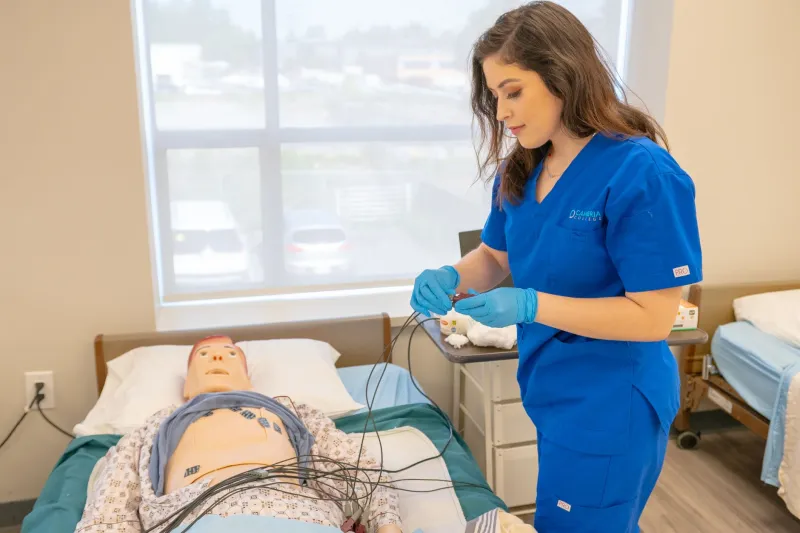
Blended learning models with mandatory skills checkoffs represent the strongest evidence-backed option among compressed formats. In these programs, online modules handle the didactic load while in-person sessions are reserved entirely for skills practice and instructor feedback. Participants arrive already familiar with the rationale behind each intervention, allowing instructors to focus time where it matters most: correcting technique, building muscle memory, and simulating realistic emergency scenarios.
Same-day in-person courses also hold merit when they are taught by qualified instructors, maintain low student-to-instructor ratios, and include adequate manikin time for every participant. The American Heart Association and the American Red Cross both offer condensed certification pathways designed with these safeguards built in, and facilities that select programs bearing those organizations' marks of approval can have reasonable confidence in the underlying methodology.
For healthcare professionals who already hold foundational knowledge—nurses returning from a leave of absence, paramedics recertifying in BLS, or physicians adding ACLS to an existing credential portfolio—accelerated formats often represent a sensible and efficient choice. The cognitive scaffolding is already in place; the refresher simply needs to confirm that skills remain sharp.
When Speed Becomes a Liability
The calculus shifts considerably for first-time learners, for individuals who work in high-acuity environments, and for any program that eliminates hands-on practice entirely.
Fully online CPR certifications—those that issue a card or certificate without requiring any supervised skill demonstration—occupy a legally and ethically ambiguous space. While some jurisdictions and employers accept these credentials for certain roles, they do not meet the standards set by the American Heart Association or the American Red Cross for healthcare provider-level certification. An employer who accepts a fully online certificate as equivalent to a skills-verified credential may be creating significant liability exposure, particularly if an employee's performance during an actual emergency is later scrutinized.
There is also the question of confidence calibration. Research on self-efficacy and emergency response suggests that individuals who complete rigorous training are more likely to act quickly and decisively during a real event. Conversely, those who completed only minimal training may overestimate their readiness—a phenomenon sometimes called the Dunning-Kruger effect in clinical education contexts—and either hesitate at a critical moment or perform techniques incorrectly while believing they are doing them right.
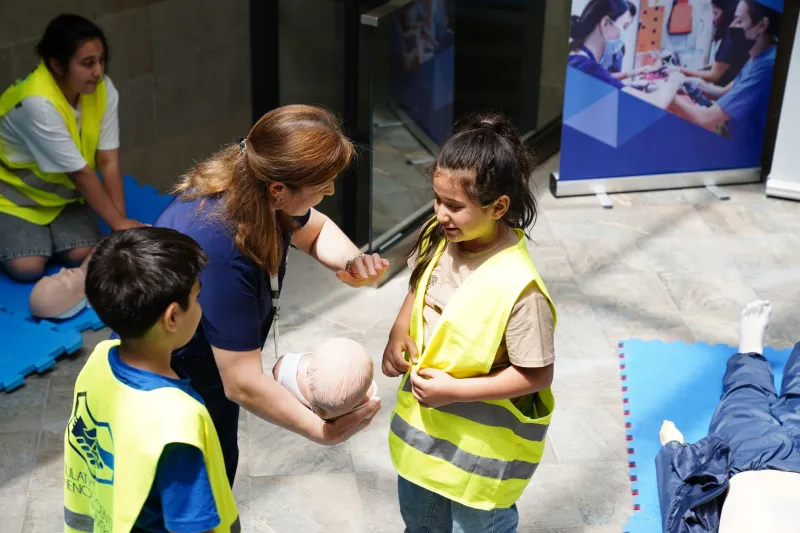
For pediatric emergencies, which require modified technique and carry their own set of assessment priorities, the stakes of inadequate hands-on training are especially pronounced. A parent or school employee who completed a fifteen-minute online module on infant CPR is not equivalently prepared to one who practiced infant compression technique under instructor supervision.
Questions Employers and Professionals Should Be Asking
Choosing a CPR certification program—whether for an individual career goal or an institutional training mandate—requires moving beyond the price tag and the completion timeline. The following questions provide a more useful framework for evaluation:
- Does the program require a supervised, hands-on skills assessment? If the answer is no, the program does not meet healthcare provider standards regardless of what the certificate states.
- What is the student-to-instructor ratio during the skills portion? Ratios above six to one significantly reduce the quality of individual feedback.
- Is the program accredited by a recognized national organization? AHA, Red Cross, and ASHI accreditation signals adherence to evidence-based curriculum standards.
- Does the format match the learner's experience level? Accelerated recertification is appropriate for experienced clinicians; it is rarely appropriate for first-time learners in high-risk roles.
- What does the employer's credentialing policy actually require? Some facilities specify not just the credential but the issuing organization, and accepting a non-compliant certificate creates administrative and legal complications.
The Bottom Line
The rise of accelerated CPR certification reflects genuine and legitimate needs within the American healthcare workforce. Time is a scarce resource, and programs that respect that reality while maintaining instructional integrity serve both learners and patients well.
The danger lies not in speed itself, but in the false equivalence between a certificate earned and a competency achieved. Healthcare professionals and the employers who credential them carry a shared responsibility to evaluate training investments with the same rigor applied to any clinical decision. At CPR Healthcare Training Academy, that standard is not a formality—it is the foundation on which every certification pathway is built.
When the moment arrives and someone's survival depends on what a trained responder does in the next few minutes, the only question that will matter is whether the training was real.