Certified but Paralyzed: The Neuroscience Behind Why Trained Responders Fail to Act When It Matters Most
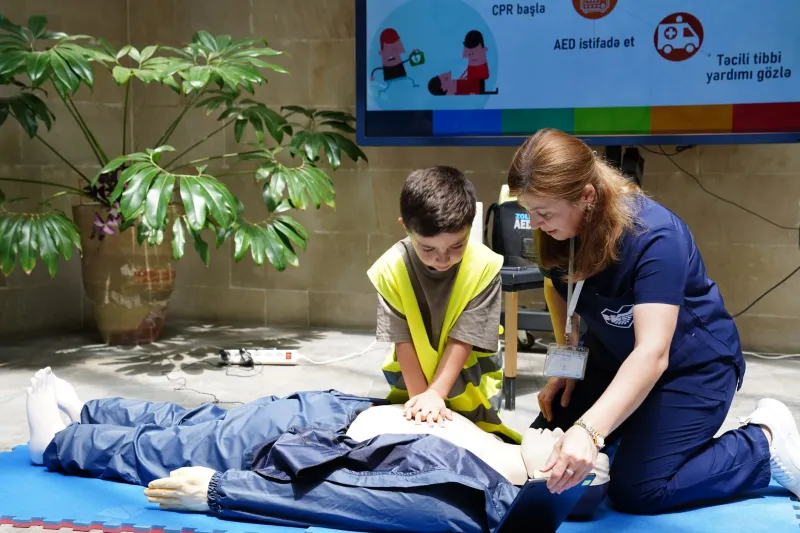
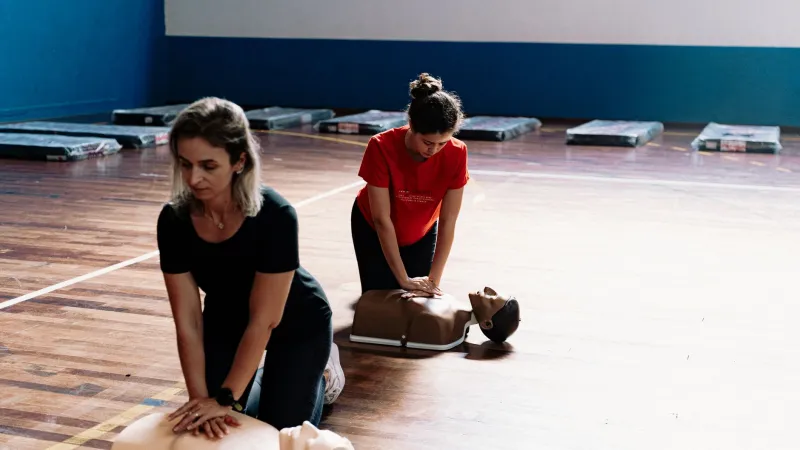
Every year, hundreds of thousands of Americans earn CPR certification cards. They complete the coursework, demonstrate chest compressions on a training manikin, answer the written questions correctly, and walk away with documented proof of competency. Yet when a colleague collapses in a conference room, or a stranger drops on a sidewalk, many of those same certified individuals stand still — watching, waiting, or looking to someone else to move first.
This is not a failure of intelligence, commitment, or character. It is, in large part, a failure of how most CPR training programs are designed. The gap between certification and confident action is rooted in biology, psychology, and the mechanics of how human beings actually perform under acute stress. Closing that gap requires understanding what happens inside the brain during a real emergency — and deliberately engineering training to address it.
What the Brain Does When the Stakes Become Real
Under normal learning conditions, the prefrontal cortex — the region responsible for rational thought, decision-making, and procedural memory retrieval — functions efficiently. A person can recall the correct compression depth, the appropriate hand placement, and the recommended rate of 100 to 120 compressions per minute without much difficulty.
But the moment a genuine emergency unfolds, the neurological landscape shifts dramatically. The amygdala, the brain's threat-detection center, triggers a cascade of stress hormones including cortisol and adrenaline. Heart rate accelerates. Attention narrows. And critically, the prefrontal cortex — the very region needed to retrieve and execute trained skills — becomes functionally suppressed.
This is the fight-or-flight response operating exactly as evolution designed it. For most of human history, this neurological override was adaptive. In a modern medical emergency, it can be catastrophic. The skills that felt automatic during a calm training session become genuinely difficult to access when the body is flooded with stress hormones and the emotional reality of the situation registers fully.
Cognitive Load and the Illusion of Readiness
Cognitive load theory, developed by educational psychologist John Sweller, offers another lens through which to understand this phenomenon. The theory holds that working memory has a finite capacity. When multiple demands compete for that capacity simultaneously — processing the scene, assessing the victim, managing bystander reactions, recalling protocol steps, and overriding the instinct to freeze — the system becomes overwhelmed.
CPR training, as traditionally structured, tends to minimize cognitive load during practice. Participants work in a controlled classroom, receive clear instructions, and perform skills in isolation from the ambient chaos of a real emergency. The result is a form of competency that is genuinely fragile: it holds up under low-stress conditions and fractures precisely when it is needed most.
This fragility is compounded by decision paralysis — a well-documented psychological phenomenon in which an individual, confronted with an urgent situation and uncertain about the correct course of action, defaults to inaction. The fear of doing something wrong can be more paralyzing than the absence of knowledge. Certified individuals sometimes hesitate not because they do not know what to do, but because the emotional weight of the situation triggers doubt about whether they remember it correctly.
The Bystander Effect in Certified Populations
Social dynamics introduce yet another layer of complexity. The bystander effect — the tendency for individuals to assume that someone else in a group will take responsibility — does not disappear simply because a person holds a certification card. In fact, some research suggests that in groups where multiple certified individuals are present, diffusion of responsibility can be even more pronounced, as each person assumes that another, perhaps more senior or more experienced, individual will step forward.
In healthcare settings, this dynamic is further complicated by hierarchy. A certified nursing assistant may hesitate to initiate CPR in the presence of physicians, assuming that a higher credential implies a higher obligation to act. That assumption, however understandable, costs time — and in cardiac arrest, time is the variable that most directly determines survival.
Training Architectures That Build Real-World Readiness
The good news is that these neurological and psychological barriers are not immutable. They can be systematically addressed through training methodologies that are intentionally designed to simulate the conditions under which skills must be performed.
Stress inoculation training exposes participants to controlled levels of emotional and physiological arousal during practice sessions. By gradually increasing the realism and intensity of training scenarios, programs can help the brain begin to associate stress cues with trained responses rather than with paralysis. Over time, the fight-or-flight response becomes a trigger for action rather than an obstacle to it.
Deliberate scenario repetition moves beyond single-pass skill demonstration toward repeated, varied practice under conditions that approximate real emergencies. Participants encounter unexpected variables — a victim who is partially obscured, a bystander who is panicking, an environment with background noise — that require them to adapt their response rather than simply reproduce a memorized sequence.
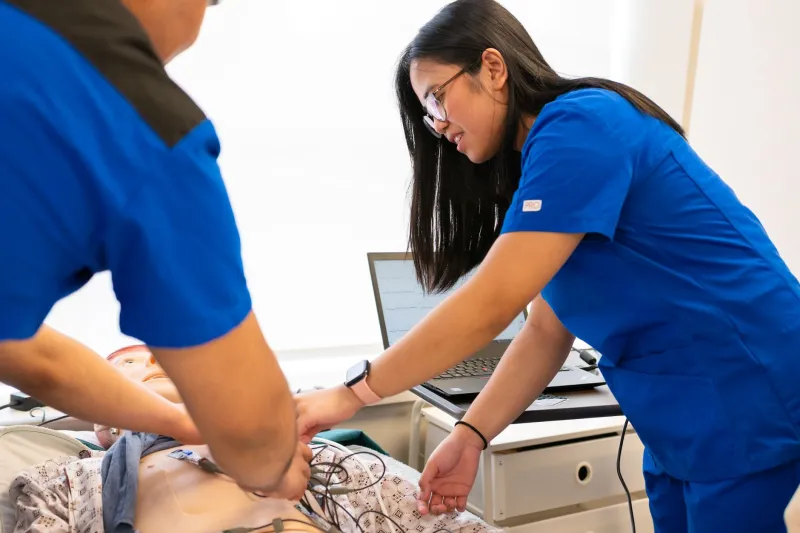
High-fidelity simulation using advanced manikins and realistic environmental staging has demonstrated measurable improvements in responder confidence and reaction time. When training environments feel consequential, the brain begins encoding the associated skills in ways that are more resistant to stress-induced suppression.
Team-based training with explicit role assignment directly addresses diffusion of responsibility by requiring participants to practice the act of designating roles, calling for help, and initiating compressions without waiting for consensus. These micro-decisions, rehearsed repeatedly, become more accessible under pressure.
What Certification Programs Must Acknowledge
For CPR certification to fulfill its stated purpose — producing individuals who can and will respond effectively to cardiac arrest — the field must reckon honestly with the limits of knowledge-based assessment. A written exam measures recall. A manikin demonstration in a calm classroom measures motor coordination. Neither measures the psychological readiness to act under the neurological conditions that define a real emergency.
This does not mean that current certification standards are without value. BLS, ACLS, and first aid training provide the foundational knowledge that is necessary, if not sufficient, for effective response. But healthcare facilities, training organizations, and individual practitioners must recognize that the certification card marks a beginning, not an endpoint.
Regular skills reinforcement, scenario-based refreshers, and deliberate exposure to simulated stress are not supplementary luxuries. They are the mechanisms by which certification is converted into confidence — and by which a trained bystander becomes a capable responder in the moment that matters most.
The Standard Worth Holding
At CPR Healthcare Training Academy, the commitment to certification is inseparable from a commitment to genuine competency. A card that certifies knowledge without building the capacity to act under pressure represents an incomplete standard — one that disserves both the responder and the patient.
The neuroscience is clear, the psychological research is consistent, and the training solutions are available. The question is whether the healthcare training community will apply them with the same rigor it brings to the content of the courses themselves. Certification should be the entry point to readiness — not a substitute for it.