How Quickly CPR Competency Fades — And the Training Schedules That Actually Prevent It

A laminated certification card carries an implicit promise: the person holding it can perform CPR effectively until the printed expiration date arrives. That promise, unfortunately, is not well supported by the science of human memory and motor learning. Studies published in peer-reviewed emergency medicine journals have repeatedly demonstrated that measurable skill degradation begins within weeks of initial training — not months, and certainly not two years. For healthcare facilities and the professionals who staff them, this gap between credential and competency represents both a patient safety concern and a liability exposure that deserves serious attention.
The Neuroscience Behind Skill Forgetting
Understanding why CPR competency erodes requires a brief look at how the brain encodes procedural knowledge. When a learner first practices chest compressions and rescue breaths, the brain activates a network of regions associated with motor planning, sequencing, and feedback processing. With sufficient repetition during initial training, some of this knowledge migrates from conscious, effortful recall into procedural memory — the same system that governs riding a bicycle or typing on a keyboard.
The critical distinction, however, is that CPR training sessions are typically short and infrequent. Unlike the thousands of repetitions that produce deeply entrenched motor programs, a standard certification course may involve only a handful of hands-on practice cycles. The resulting memory trace is real, but it is also fragile. Neuroscientists describe this as a "labile" memory state — one that requires periodic reactivation to remain accessible under pressure.
When that reactivation does not occur, two distinct forms of forgetting take hold. Declarative forgetting erodes the conscious knowledge of protocols — correct compression depth, appropriate rate, proper hand placement. Procedural forgetting, which tends to be somewhat slower but equally damaging in emergency contexts, gradually dismantles the automatic motor sequences that allow a trained responder to act quickly without deliberate step-by-step reasoning. Both processes are accelerated by stress, fatigue, and infrequent practice — conditions that are, not coincidentally, endemic to healthcare environments.
What the Research Actually Shows About Retention Timelines
A 2011 study published in Resuscitation found that healthcare providers demonstrated significant declines in CPR skill quality as early as three to six months after certification training. A subsequent meta-analysis examining multiple cohorts across hospital and clinical settings confirmed that compression depth, rate accuracy, and hand positioning all deteriorated substantially within the first six months — with some participants showing measurable degradation as early as four weeks post-training.
Perhaps most concerning for facilities operating under a biennial recertification model is research suggesting that by the twelve-month mark, a substantial proportion of certified healthcare workers perform compressions that fall outside American Heart Association guidelines for depth and rate. By the time the two-year renewal window opens, many credentialed professionals are, in practical terms, operating at a level closer to an untrained bystander than to a competent responder.
These findings do not indict the professionals themselves. They indict a system that conflates credentialing with competency and treats a renewal date as a proxy for readiness.
Why Traditional Annual Refreshers Fall Short
Some facilities have responded to retention concerns by scheduling annual refresher sessions — an improvement over biennial-only models, but still insufficient according to the available evidence. A single annual booster, while better than nothing, does not address the month-by-month erosion that occurs between sessions. It also tends to recreate the same concentrated, high-volume learning event that produced the fragile initial memory trace in the first place.
The cognitive science concept most relevant here is the "spacing effect" — a well-documented phenomenon in which information and skills are retained far more durably when practice is distributed across time rather than massed into single sessions. A learner who practices CPR compressions for five minutes on ten separate occasions across a year will, on average, retain those skills more reliably than a learner who completes a single fifty-minute refresher session annually. The total practice time may be equivalent, but the neurological outcome is meaningfully different.
Evidence-Based Micro-Training: A Practical Framework
The solution emerging from both cognitive science and emergency medicine research is sometimes called "booster training" or, in implementation-focused literature, "micro-training." Rather than relying on periodic high-intensity certification events, micro-training distributes brief, focused skill practice throughout the calendar year. The structure can vary by facility, but several models have demonstrated effectiveness in peer-reviewed evaluations.
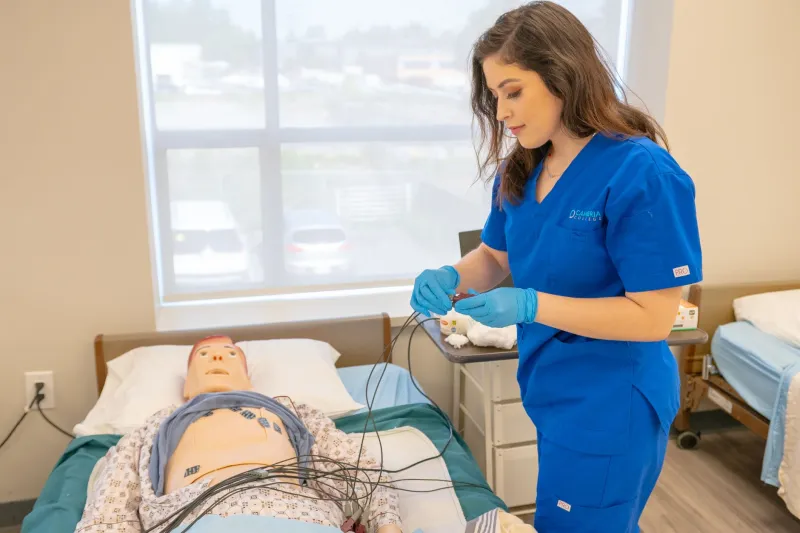
Monthly Compression Drills: Facilities can deploy CPR manikins in break rooms, simulation labs, or staff lounges and require brief, unannounced or scheduled five-minute compression practice sessions once per month. Research from Scandinavian hospital systems that pioneered this approach found that monthly manikin access, combined with simple self-assessment checklists, maintained compression quality at certification-level standards across twelve-month follow-up periods.
Quarterly Scenario Refreshers: Beyond isolated skill repetition, quarterly scenario-based exercises that simulate realistic emergency contexts — including team communication, AED deployment, and handoff protocols — address the decision-making dimensions of CPR that pure compression drills cannot replicate. These sessions need not exceed thirty minutes to produce measurable retention benefits.
Digital Micro-Learning Modules: Short video-based or app-delivered content reviewed between hands-on sessions can reinforce declarative knowledge — protocol sequences, rate and depth targets, algorithm decision points — without requiring facility time or equipment. When paired with hands-on practice, this blended approach has shown additive retention benefits in simulation-based research.
Skills Verification Checkpoints: Integrating brief, low-stakes competency checks into existing workflows — during annual performance reviews, at department meetings, or as part of onboarding refreshers — normalizes CPR practice as an ongoing professional expectation rather than a periodic credentialing event.
Implementing Micro-Training Without Overwhelming Staff
For administrators considering a shift toward distributed training models, the practical concern is almost always staff capacity. Healthcare workers already navigate dense schedules, mandatory education requirements, and credential maintenance obligations across multiple domains. Adding training touchpoints, even brief ones, requires thoughtful integration into existing workflows rather than simple addition to an already full calendar.
The most successful implementations treat micro-training as a replacement for some portion of existing compliance education rather than a supplement to it. Facilities that have consolidated lower-priority annual training modules to create space for monthly CPR practice have reported both improved retention outcomes and — importantly — higher staff satisfaction with the training experience. Brief, relevant, skill-focused practice is consistently rated more favorably by healthcare professionals than lengthy, infrequent compliance sessions.
Leadership buy-in is equally essential. When unit managers and department directors visibly participate in micro-training sessions, adoption rates among frontline staff improve substantially. The message conveyed is that CPR readiness is a shared professional standard, not an administrative checkbox.
Rethinking What Certification Actually Certifies
The broader implication of retention research is a necessary reconsideration of what a CPR certification card actually represents. At the moment of issuance, it certifies demonstrated competency. Thereafter, it certifies only that training occurred at some point within a defined window — a meaningfully different claim.
Healthcare facilities that recognize this distinction are better positioned to build training cultures that prioritize genuine readiness over administrative compliance. Certification remains essential — it establishes the foundational knowledge and meets regulatory and accreditation requirements — but it functions most effectively as a starting point for an ongoing practice regimen rather than a two-year permission slip.
At CPR Healthcare Training Academy, our commitment extends beyond the certification event itself. Equipping healthcare professionals and the facilities they serve with the knowledge to sustain competency between credentials is, ultimately, what it means to be prepared when a life depends on it.