The Two-Year Illusion: What Your CPR Certification Card Doesn't Tell You About Skill Decay
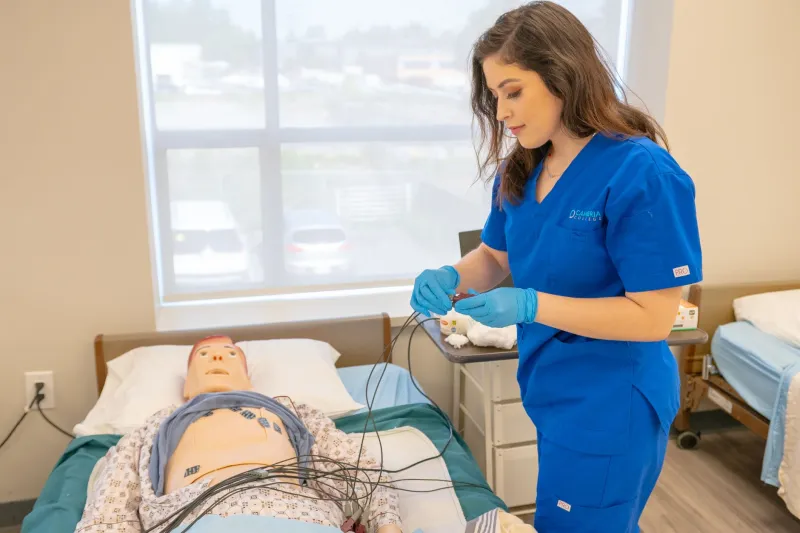
For most healthcare professionals in the United States, the CPR certification cycle follows a familiar rhythm. Complete the course, receive the card, file it away, and schedule the next renewal sometime before the expiration date arrives. The card itself communicates a clear message: you are certified until this date. What it does not communicate — and what no laminated credential ever could — is the degree to which the skills it represents have quietly deteriorated in the months since training concluded.
This is the two-year illusion. The certification remains technically valid. The clinician remains legally credentialed. But the hands-on competency that the card was originally issued to reflect? That is an entirely different matter.
What the Research Actually Shows About Skill Retention
The scientific literature on CPR skill retention is both consistent and sobering. Multiple peer-reviewed studies have demonstrated measurable degradation in chest compression quality, ventilation technique, and overall resuscitation performance within months of initial training — not years. Research published in Resuscitation and related journals has found that critical performance metrics, including compression depth, compression rate, and hand placement accuracy, begin declining significantly within three to six months of training completion.
This is not a reflection of negligence or inattention on the part of healthcare workers. It is a reflection of how human motor memory functions. Skills that are practiced infrequently, particularly those performed under high-stress conditions, are subject to both procedural forgetting and performance degradation under pressure. The body may retain a general familiarity with the sequence of CPR steps, but the precision required for effective resuscitation — the correct depth, the correct rate, the correct recoil — demands far more than casual familiarity.
For a profession in which the margin between adequate and effective CPR can determine whether a patient survives with neurological function intact, this distinction is not academic. It is clinical.
The Stress Variable That Certifications Cannot Capture
Certification assessments, by design, occur in controlled environments. The manikin does not resist. The room is quiet. The evaluator is supportive. Real cardiac emergencies share none of these conditions.
Decades of research on stress physiology confirm that high-stakes emergencies trigger acute physiological responses — elevated cortisol, narrowed attentional focus, fine motor degradation — that can meaningfully impair even well-rehearsed procedural performance. This is not unique to novice responders. Studies involving experienced healthcare providers have documented performance gaps between simulated and real-world resuscitation scenarios, particularly when those providers had not engaged in recent practice.
The implication is straightforward: a clinician who completed CPR training twenty months ago and has not practiced since may encounter a real cardiac arrest with both a degraded skill set and a physiological stress response working against them simultaneously. The certification card in their wallet reflects neither reality.
Protocol Evolution Within the Certification Window
Skill decay is not the only variable that erodes the accuracy of a two-year credential. The American Heart Association periodically updates its resuscitation guidelines based on emerging evidence, and those updates do not pause to accommodate individual certification timelines. A clinician certified in early 2023, for example, may not have received instruction aligned with subsequent guideline refinements — and their card will not reflect this gap.
This matters in practice. Compression-to-ventilation ratios, the sequencing of interventions, and the emphasis placed on minimizing interruptions to chest compressions have all evolved over successive guideline cycles. A provider operating from training that predates a meaningful protocol update is, in a technical sense, practicing an older version of the standard — regardless of what their expiration date reads.
Rethinking the Renewal Mindset
The problem, at its core, is that the certification system was designed to establish minimum competency thresholds at defined intervals. It was not designed — and should not be interpreted — as a guarantee of consistent competency throughout the entire interval it covers.
Healthcare professionals who internalize this distinction are better positioned to take ownership of their own preparedness. Rather than treating the expiration date as the trigger for action, the more defensible approach is to treat it as the outer boundary of an acceptable practice window — one that should prompt recertification or structured refresher activity considerably earlier.
Several frameworks have been proposed in the clinical education literature. Some advocate for annual skills assessments even within two-year certification cycles. Others recommend brief, targeted simulation exercises at the six- and twelve-month marks following initial training. Healthcare facilities in the United States have increasingly incorporated high-frequency, low-dose training models — short, repeated simulation encounters rather than infrequent, comprehensive courses — as a strategy for sustaining performance between formal renewal cycles.
What Proactive Recertification Actually Looks Like
For individual healthcare professionals, proactive recertification does not necessarily mean completing a full certification course multiple times within a single validity window. It does mean engaging with the material in structured, deliberate ways before degradation becomes consequential.
Practical strategies include:
- Scheduling recertification twelve to fourteen months into a two-year cycle, rather than waiting until the final weeks before expiration. This approach ensures the most current guidelines are integrated into practice while the previous training is still relatively fresh.
- Participating in simulation-based refreshers offered through hospital training departments, professional associations, or platforms such as CPR Healthcare Training Academy, which provide skills reinforcement outside the formal certification context.
- Engaging with case-based learning and protocol review on a quarterly basis, particularly for providers whose clinical roles do not involve frequent resuscitation encounters.
- Tracking guideline updates from the American Heart Association and ensuring that any changes to recommended protocols are incorporated into practice promptly, rather than waiting for the next formal renewal cycle.
The Professional Standard Behind the Card
Healthcare credentialing exists to protect patients. The certification card is a proxy for competency — a documented assurance that the individual who holds it has demonstrated the skills necessary to respond effectively in an emergency. When the card becomes a substitute for genuine preparedness rather than evidence of it, the system fails the very purpose it was created to serve.
For healthcare professionals committed to the standard that CPR Healthcare Training Academy advocates — certify meaningfully, respond confidently, advance the quality of care — the expiration date on a CPR card is a regulatory floor, not a professional ceiling. The real measure of preparedness is not what the card says. It is what the hands can do when seconds matter most.
If your last CPR training is more than a year behind you, the most responsible question is not whether your card is still valid. It is whether your skills are.