Left Behind in an Emergency: The Unequal Access to CPR Training in Rural and Low-Income America

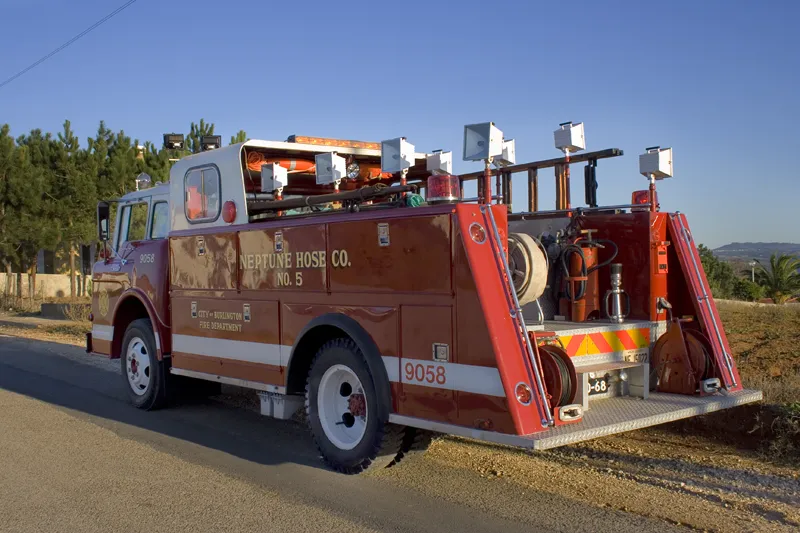
Photo: U.S. Marine Corps photo by Lance Cpl. Trent A. Henry, Public domain, via Wikimedia Commons
When a cardiac emergency occurs in a major metropolitan area, the statistical landscape is relatively favorable. Bystanders are more likely to be CPR-certified, AEDs are more likely to be within reach, and emergency medical services are more likely to arrive within the four-to-six minute window that represents the boundary of meaningful neurological survival. The system is imperfect, but it functions.
In rural Wyoming, in the Mississippi Delta, in the colonias along the Texas-Mexico border, that system looks very different. Ambulance response times in rural America routinely exceed 20 minutes. AED coverage is sparse. And the rate of bystander CPR intervention — perhaps the single most impactful variable in cardiac arrest survival — lags well behind national averages in communities where training has never been accessible or affordable.
This is not a minor statistical footnote. It is a public health emergency that receives a fraction of the attention it deserves.
The Geography of Unpreparedness
Approximately 46 million Americans live in rural areas, according to the U.S. Census Bureau. Many of these communities are served by volunteer emergency medical services staffed by individuals who are themselves stretched thin — often covering vast geographic territories with aging equipment and limited organizational support.
The implications for cardiac arrest survival are severe. Research published in medical literature consistently demonstrates that survival rates for out-of-hospital cardiac arrest in rural communities are significantly lower than in urban settings, even after controlling for patient demographics. A meaningful portion of that gap is attributable to delayed EMS response — but bystander inaction, driven in part by the absence of training, compounds the problem substantially.
When the nearest certified CPR course is a two-hour drive from home, attendance requires not just willingness but access to transportation, the ability to take time away from work, and the financial resources to cover both the course fee and associated travel costs. For many rural families, that combination of barriers is simply insurmountable.
Cost as a Barrier to Certification
The financial dimension of this crisis extends well beyond rural geography. In low-income urban neighborhoods, the barriers are different in character but equally real in consequence.
Standard CPR and first aid certification courses can cost anywhere from $50 to $150 per participant when obtained through private training providers. For a household operating near the federal poverty line, that expenditure represents a genuine sacrifice. Workplace-sponsored training — the most common pathway to certification for middle-income workers — is far less prevalent in industries characterized by part-time employment, high turnover, and limited benefits. Gig workers, domestic workers, agricultural laborers, and employees of small businesses without formal HR infrastructure are disproportionately likely to reach adulthood without ever having received emergency response training of any kind.
OSHA mandates first aid training in certain workplace categories, but enforcement is uneven and the requirement does not extend to all employment settings. The result is a workforce emergency preparedness landscape that is deeply stratified by income and employment type.
Language and Cultural Accessibility
Beyond geography and cost, there is a third dimension of the access gap that is less frequently discussed: linguistic and cultural barriers to participation.
A significant portion of the United States' rural and low-income workforce consists of individuals whose primary language is not English. CPR training materials, instructor certification programs, and even the signage on publicly accessible AED units have historically been developed with an English-speaking audience as the default. While Spanish-language resources have expanded in recent years, comprehensive multilingual training infrastructure remains inconsistent across regions.
Cultural factors also influence willingness to engage with formal training programs. In communities with historically strained relationships with healthcare institutions, skepticism toward medical authority can create reluctance to participate in certification programs perceived as part of that institutional framework. Effective outreach requires not just translation but genuine community partnership.
What Successful Community Initiatives Look Like
Despite these systemic challenges, a number of community-driven models have demonstrated that expanding CPR access in underserved populations is achievable with the right approach.
Mobile CPR training units — essentially outfitted vans or trailers equipped with mannequins, AED trainers, and certified instructors — have been deployed in several states to reach communities where fixed training sites are impractical. These programs eliminate the transportation burden entirely by bringing the classroom to community gathering points: churches, community centers, school parking lots, and agricultural worksites.
Some state health departments have partnered with public school systems to implement CPR training as a graduation requirement, ensuring that younger generations in underserved communities receive foundational skills regardless of household income or parental certification status. As of this writing, more than 35 states have enacted legislation requiring CPR instruction in high schools — a policy development that represents genuine progress, though implementation quality varies considerably.
Faith-based organizations have also emerged as effective conduits for training in communities where institutional trust is concentrated in religious leadership. Programs that train congregation members and position churches as community emergency response hubs have achieved meaningful penetration in rural and low-income communities that traditional outreach has failed to reach.
The Role of Employers and Regulatory Frameworks
For the access gap to close in any durable way, institutional actors — particularly employers — must accept a greater share of responsibility for workforce emergency preparedness.
Small businesses in rural areas often cite cost and logistics as reasons for not maintaining current CPR and first aid certification among their staff. Federal and state grant programs exist to offset these costs for qualifying small employers, but awareness of these programs is limited and application processes can be cumbersome. Streamlining access to training subsidies and expanding eligibility criteria would lower the barrier for employers who are willing but resource-constrained.
Healthcare systems with rural service footprints have an institutional interest — and arguably an ethical obligation — in supporting community-level emergency preparedness. Some hospital systems have begun funding community CPR training as part of their community benefit obligations under the Affordable Care Act's nonprofit hospital requirements. Scaling this model more aggressively would channel existing institutional resources toward a demonstrable public health need.
A Question of Equity
At its core, the CPR training access gap is an equity issue. The likelihood that a bystander will intervene effectively in a cardiac emergency correlates with factors — income, geography, employment type, language — that have nothing to do with the willingness or capacity of individuals to learn these skills. People in underserved communities are not less motivated to be prepared. They are less supported in becoming so.
Emergency preparedness infrastructure in the United States has long defaulted to a model that serves those who are already well-resourced. Extending that infrastructure equitably requires deliberate investment, creative delivery models, and a recognition that certification is not a luxury — it is a foundational component of community health.
At CPR Healthcare Training Academy, we are committed to the principle that life-saving skills should not be rationed by zip code or income bracket. Achieving that goal requires acknowledging where the system is failing and building the partnerships necessary to change it.
The communities most likely to need bystander CPR intervention are, at present, the communities least likely to have it. That is a problem the entire healthcare training sector has a responsibility to address.