Off the Clock, Off Their Game: Why Credentialed Clinicians Hesitate When Emergencies Strike Outside Their Domain
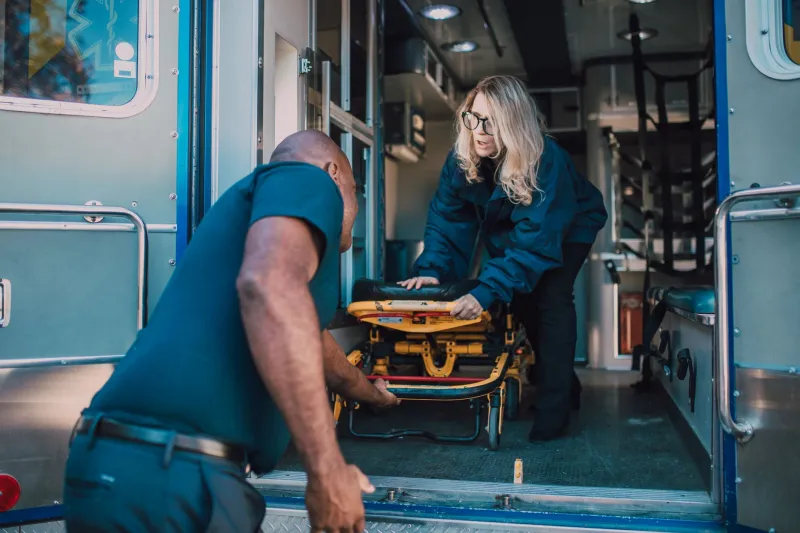
There is a troubling irony embedded in modern healthcare training. The same physician who moves with calm authority through a hospital code blue may stand motionless in a shopping mall when a stranger collapses nearby. The emergency room nurse who manages chaotic multi-patient scenarios with practiced precision may hesitate at a youth soccer game when a child's parent suddenly drops to the ground. This phenomenon—decision paralysis among credentialed medical professionals in unfamiliar emergency settings—is neither rare nor fully understood. Yet it carries consequences that no certification program can afford to ignore.
The Psychology Behind Role-Specific Competence
Medical training is, by design, highly contextual. Clinicians learn their skills within specific environments—emergency departments, surgical suites, labor and delivery wards—and their competence becomes deeply tied to those environments. Psychologists refer to this as context-dependent memory, a well-documented phenomenon in which performance is optimized when the conditions of learning match the conditions of recall.
When a healthcare professional is stripped of their familiar surroundings—the crash cart, the monitoring equipment, the support staff, the institutional protocols—the cognitive scaffolding that supports confident action is suddenly absent. What remains is a highly trained individual experiencing something closer to what any untrained bystander might feel: uncertainty, hesitation, and a disorienting sense of inadequacy.
Research published in emergency medicine literature has consistently demonstrated that even experienced clinicians underperform on basic life support tasks when those tasks are performed outside their routine clinical environment. The skills are intact. The willingness to act is compromised.
The Territorial Hesitation No One Talks About
Beyond environmental unfamiliarity, there is a subtler force at work: professional territoriality. Healthcare workers are trained to function within defined scopes of practice. A respiratory therapist understands their role in a hospital setting. A radiology technician knows precisely what falls within their professional boundaries. These boundaries are not arbitrary—they exist to protect patients and practitioners alike.
But in a public emergency, those boundaries become psychological barriers. A technician who would never hesitate to perform CPR on a hospital patient may wonder, in a grocery store parking lot, whether initiating compressions on a stranger falls within their scope. A specialist physician may doubt whether their expertise—so refined within a narrow clinical domain—translates meaningfully to a general cardiac arrest scenario.
This hesitation is compounded by the diffusion of responsibility, the social psychological principle underlying the classic bystander effect. When multiple people are present, each individual assumes that someone else—perhaps someone more qualified—will take action. Among a crowd that includes a healthcare worker, this dynamic becomes paradoxical. The most qualified person in the vicinity may be the last to step forward, precisely because their training has made them acutely aware of the gap between their specialty and the situation at hand.
Liability Fears in a Litigious Culture
The United States healthcare system operates within an exceptionally litigious environment. Medical professionals are acutely aware that their actions—even well-intentioned ones—can carry legal consequences. This awareness does not disappear when a clinician removes their badge and walks out of the hospital.
Every state in the US has enacted some form of Good Samaritan law designed to protect individuals who provide emergency assistance in good faith. These statutes generally shield lay responders and trained professionals alike from civil liability when they act without expectation of compensation. However, research consistently shows that healthcare workers are often uncertain about the specific protections their state's laws afford them, particularly when they act outside their credentialed role.
This legal ambiguity feeds hesitation. A nurse who is uncertain whether her state's Good Samaritan statute covers her actions as a private citizen may pause long enough for that pause to become fatal. Certification programs have a responsibility to address this knowledge gap directly—not as a legal disclaimer buried in course materials, but as a core component of emergency response education.
What Certification Programs Are Getting Wrong
The dominant model of CPR and BLS certification in the United States trains individuals to perform specific skills under specific conditions. Mannequin-based scenarios, controlled classroom environments, and standardized assessment rubrics are effective at establishing technical competence. They are far less effective at building the psychological readiness required to act in chaotic, unfamiliar, real-world situations.
For healthcare professionals specifically, this gap is widened by the fact that most certification training does not explicitly address the psychological dimensions of out-of-hospital response. Topics such as role ambiguity, bystander dynamics, liability awareness, and the mental shift required to transition from specialist to general responder are rarely integrated into standard curricula.
The result is a workforce that is technically certified but psychologically underprepared for the full range of scenarios in which their skills may be needed.
Building Responders Who Act Anywhere, Not Just Everywhere They're Employed
Addressing this gap requires a deliberate expansion of what CPR and emergency response certification is designed to accomplish. Several evidence-informed strategies merit serious consideration by training programs and healthcare institutions alike.
Scenario diversity in training environments. Simulation exercises should extend beyond clinical settings to include public spaces—airports, restaurants, sporting venues, and community centers. Exposing trainees to the environmental variability of real emergencies builds the cognitive flexibility required to act outside familiar contexts.
Explicit instruction on the bystander effect. Trainees should understand the psychology of bystander inhibition and receive direct guidance on how to override it. This includes practical techniques such as designating specific individuals to call 911, assertively announcing one's credentials, and taking visible leadership in an ambiguous crowd.
Integrated legal literacy. Every certification course should include clear, state-specific information about Good Samaritan protections. Healthcare professionals who understand their legal standing are measurably more likely to intervene in public emergencies.
Mental rehearsal and identity-based framing. Emerging research in performance psychology suggests that individuals who mentally rehearse emergency response scenarios—and who internalize a responder identity that is not contingent on their professional environment—demonstrate faster and more confident action in real emergencies. Certification programs that incorporate this framing are building something more durable than a two-year credential.
The Standard Must Be Higher
Healthcare professionals who hold current CPR and BLS certifications represent an enormous public health resource. They are distributed throughout communities, present in airports and restaurants and neighborhood parks, capable of delivering the kind of early intervention that meaningfully improves cardiac arrest survival rates. The US currently averages a cardiac arrest survival rate of approximately 10 to 12 percent for out-of-hospital events. Early bystander CPR can double or triple those odds.
When a trained clinician freezes because they are outside their department, that potential is squandered. The credential exists. The skill exists. What is missing is the psychological architecture to deploy both without hesitation.
Certification programs that take this seriously—that train not just the hands but the decision-making capacity of the whole professional—are building something the healthcare system urgently needs: responders who do not require a hospital badge to act like one.


